Locating and opening the tank
We find the access lids, uncover them, and open the tank safely so the full liquid level and sludge depth can be measured before any pumping begins.
Septic tank pumping service in Winchester, NV. Learn the warning signs, what the job involves, and how arid desert soils affect pumping frequency.
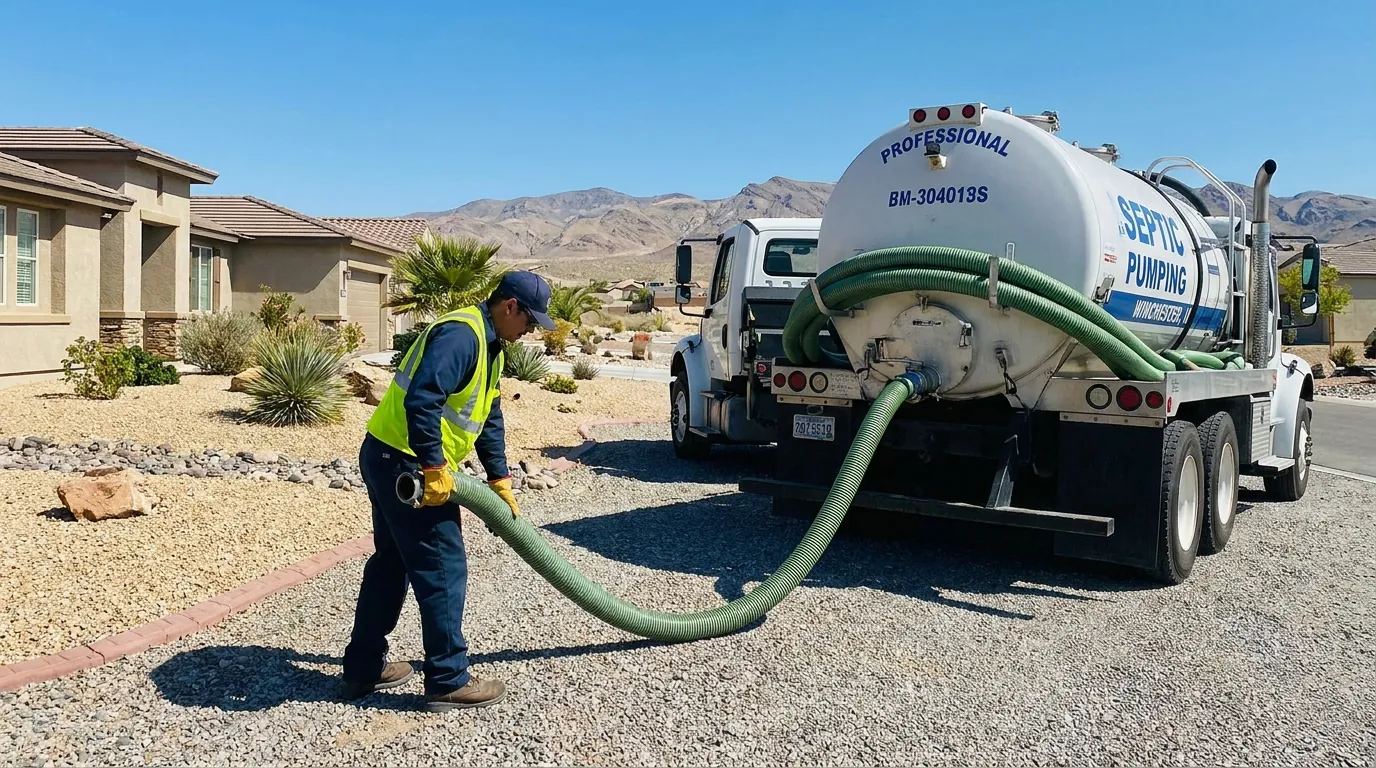
Every septic tank holds back solids while liquid effluent moves out to the drain field. Over time a layer of sludge builds on the bottom and a scum layer forms on top. When those layers grow too thick, solids start escaping toward the drain field, where they cause slow, expensive damage. Regular septic tank pumping is the single most effective way to protect the rest of the system.
In Winchester and the surrounding Las Vegas valley, the arid climate and alkaline desert soils shape how a tank behaves. Low rainfall means the water table stays deep in most neighborhoods, which is generally favorable for a drain field — but it also means the bacterial activity inside the tank depends heavily on steady household water use rather than groundwater. A tank at a part-time or seasonal home may need a different schedule than one serving a full household.
If you are not sure when your tank was last serviced, it is worth pairing pumping with a septic system inspection so you know the true condition of the baffles, the outlet, and the drain field connection.
A complete septic system pumping service should do more than empty the tank.
We find the access lids, uncover them, and open the tank safely so the full liquid level and sludge depth can be measured before any pumping begins.
The vacuum truck removes both the bottom sludge layer and the floating scum layer. Pumping only the liquid in the middle leaves the tank looking empty while the damaging solids remain.
With the tank empty we look at the inlet and outlet baffles and the tank walls for cracks, corrosion, or missing components that let solids pass through.
You get a plain description of what we saw and a realistic interval before the next service, based on your household size and usage.
The old rule of thumb — pump every three to five years — is only a starting point here. Household size matters most: a family of five loads a tank far faster than a couple. Garbage disposals, water softeners, and frequent laundry all add solids or hydraulic load. In the Winchester area, homes that sit empty for stretches see slower bacterial breakdown, so scum and sludge can behave unpredictably even when water use is low.
Because desert soils drain differently than the loamy soils septic guidelines were written for, we base your interval on what we actually measure in the tank rather than a generic number. If pumping reveals problems downstream, our drain field service addresses the part of the system that is hardest to replace.
Most households fall in the three-to-five-year range, but the right interval depends on tank size, how many people live in the home, and water habits. We measure the sludge and scum layers each visit so your next date reflects your real usage rather than a guess.
Cost is driven by tank size, how much sludge has accumulated, and how easy the lids are to access. A tank that has gone many years without service or has buried lids takes more time. We can walk you through the factors before we start.
Yes. Heavily loaded tanks take longer and sometimes need extra water to break up hardened sludge, but they can almost always be pumped. We also recommend an inspection afterward to check for damage that may have occurred while solids were escaping.
It helps if we can locate the lids and confirm access, but many jobs can be completed as long as the tank location is known and reachable. We will confirm details when you schedule.
Call to describe the problem and get a quote for work in Winchester, NV.