Complete pump-out
We remove the floating grease cap, the settled food solids, and the liquid so the entire trap is emptied rather than skimmed.
Grease trap pumping in Winchester, NV for kitchens and food operations. Prevent clogs, odors, and overflows with scheduled trap service.
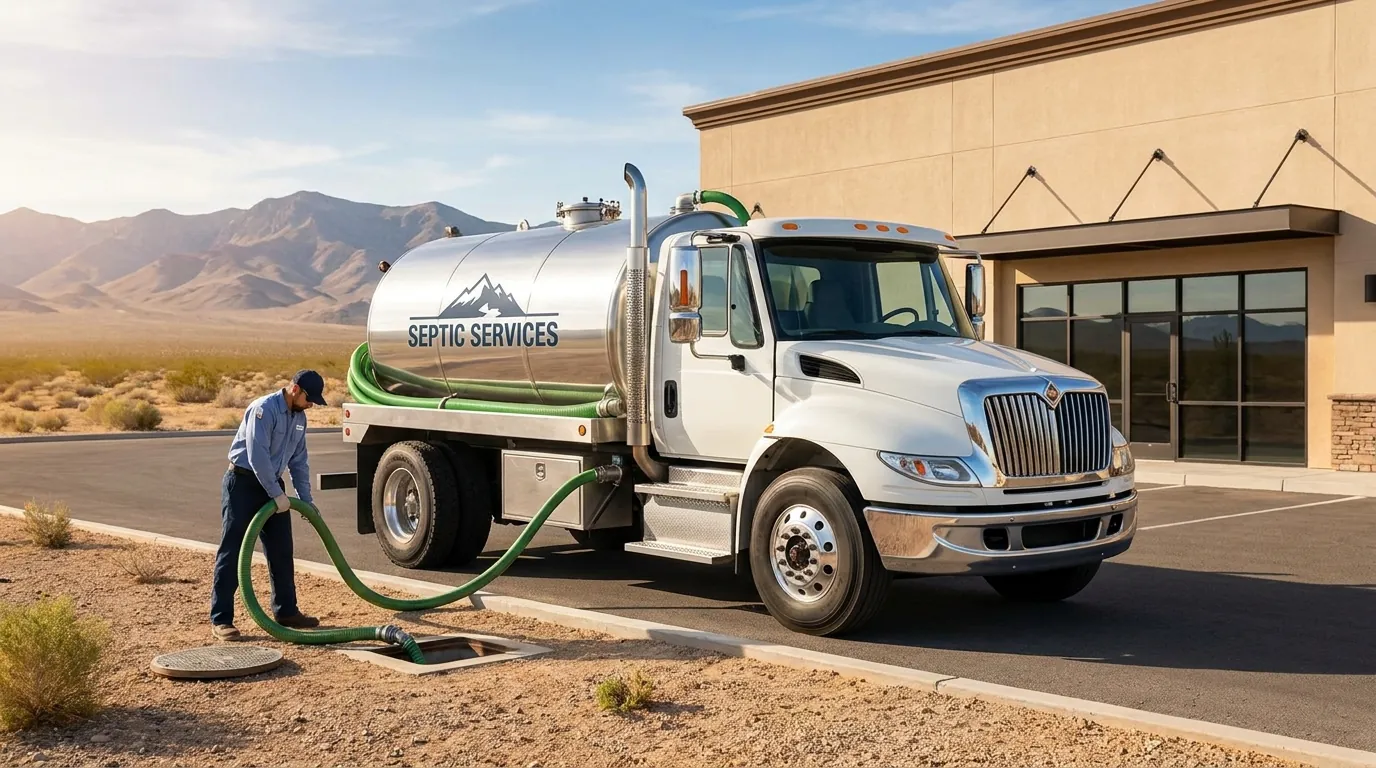
A grease trap slows wastewater from a kitchen long enough for fats, oils, and grease to cool, separate, and float to the top while food solids sink. Between them, the cleaner water in the middle passes on to the sewer or septic system. When the trap fills with too much grease and solids, that separation stops working — grease carries downstream, drains slow, odors build, and eventually the trap overflows.
For any kitchen — whether a restaurant, a food operation, or a busy household setup — grease trap pumping on a regular schedule is what keeps the problem from ever reaching that point. A neglected trap is one of the fastest ways to clog a line and, on a septic property, to send grease toward the tank and drain field where it does lasting harm.
On properties served by a septic system, grease control works hand in hand with routine septic tank pumping, because grease that slips past the trap accelerates buildup in the tank.
Trap service should leave the unit fully emptied and flowing freely.
We remove the floating grease cap, the settled food solids, and the liquid so the entire trap is emptied rather than skimmed.
Grease clings to the walls and baffles of a trap. We scrape and clear these surfaces so the trap works at full capacity again.
We check that the inlet and outlet are clear and that baffles are intact, since a damaged baffle lets grease pass straight through.
Based on how full the trap was, we suggest a schedule that keeps it well below the point where grease starts carrying over.
Winchester's warm climate keeps grease more fluid inside the trap for longer, which can let it travel farther downstream before it hardens in a cooler section of line. That makes staying ahead of the buildup more important than waiting for a visible overflow. Higher-volume kitchens in the busy Las Vegas valley often need shorter intervals than a light-use setup.
If a trap has already allowed grease into a septic system, the tank and lines downstream may need attention too. Pairing trap service with a septic system inspection helps confirm whether grease has reached the tank or the drain field.
It depends on the size of the trap and how much grease the kitchen produces. Many operations follow the guideline of servicing when the trap is around a quarter full of grease and solids; we set an interval based on how full yours is at each visit.
Grease carries downstream, drains slow, odors develop, and the trap can overflow. On a septic property, escaped grease accelerates sludge buildup in the tank and can harm the drain field.
Yes. A trap that has filled past capacity loses its ability to separate grease, and the grease that carries into the line can harden and block it, causing backups in the kitchen.
On septic properties, grease that gets past the trap adds to the scum layer in the tank and can move toward the drain field. Regular trap pumping is part of protecting the whole system.
Call to describe the problem and get a quote for work in Winchester, NV.