Septic Emergency Service in Winchester, NV
Septic emergency service in Winchester, NV for backups, overflows, and sewage odors. What to do first and how urgent response protects your property.
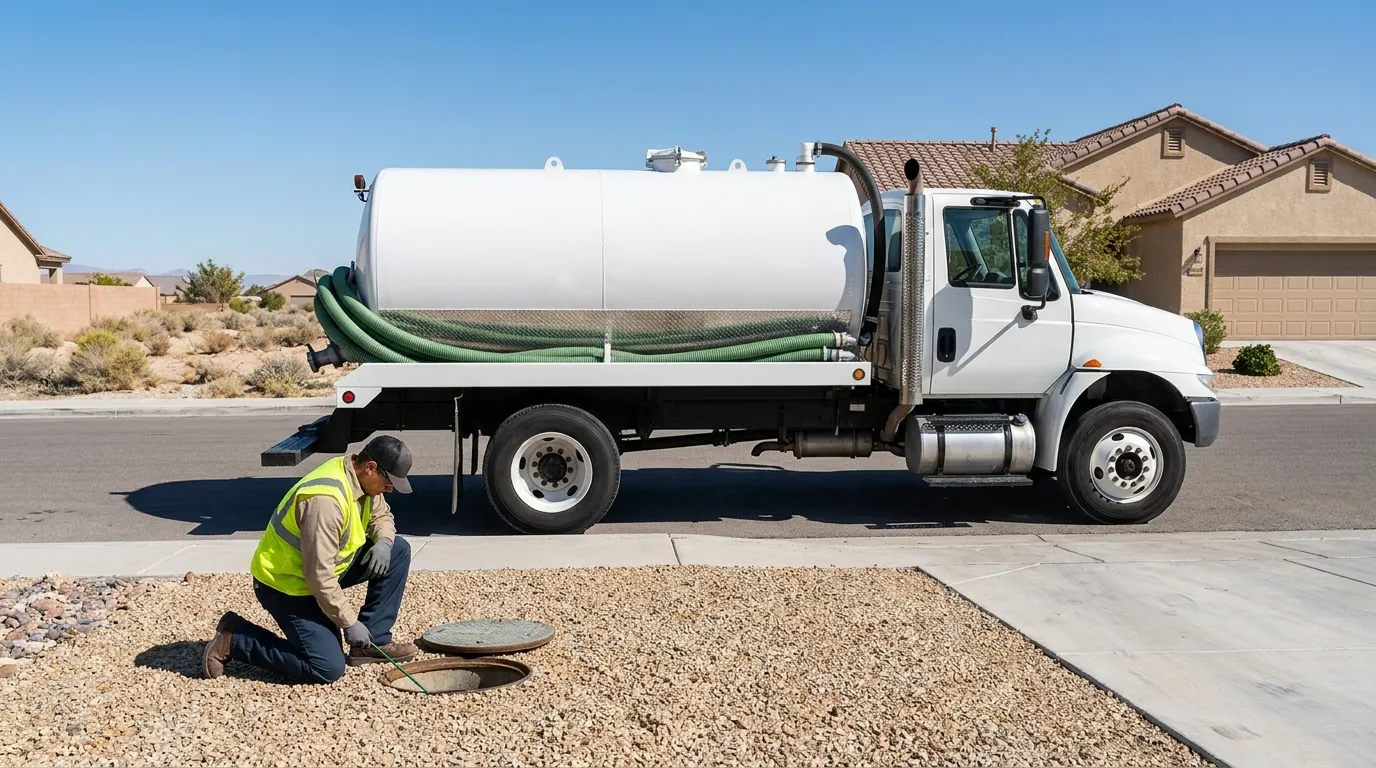
When a septic problem can't wait
Some septic problems are true emergencies. Sewage backing up into sinks, tubs, or floor drains, a tank overflowing at the lid, or wastewater surfacing in the yard all point to a system that has run out of anywhere for water to go. Beyond the mess, standing sewage is a health hazard and can damage flooring, walls, and the drain field.
The first warning is usually gradual — drains across the house slow at the same time, toilets gurgle, and odors appear — but once water starts coming back up, the situation needs immediate attention. Stopping water use is the single most useful thing a homeowner can do while help is on the way: every flush and every load of laundry adds to a system that already has nowhere to put it.
Many emergencies are simply a tank that filled past capacity, which fast septic tank pumping resolves. Others trace back to a failing drain field, which we assess through our drain field service once the immediate backup is cleared.
What to expect during an emergency call
The priority is stopping the overflow, then finding out why it happened.
-
Stop the water and stay clear
Before we arrive, stop using water and keep people and pets away from any surfacing sewage. This limits both the mess and the health risk.
-
Locate and open the tank
We find and open the access lids quickly to confirm the liquid level and whether the tank is simply full or something downstream has failed.
-
Pump to relieve the system
Emptying the tank relieves the backup and restores flow to the house, which is often enough to end the immediate emergency.
-
Find the underlying cause
Once the pressure is off, we look for the reason — an overdue tank, a failed baffle, or a struggling drain field — so it doesn't happen again.
Desert conditions and septic emergencies
In Winchester's arid climate, most emergencies stem from tanks left too long between service rather than from groundwater or rain, since the water table sits deep across most of the valley. That means many backups are preventable with a sensible pumping schedule. The exception is the rare heavy storm, when a burst of runoff can saturate ground around a marginal drain field and tip it over the edge.
After we resolve an emergency, an septic system inspection is the best way to understand whether the event was a one-time overload or a sign of a deeper problem. Knowing the difference is what keeps a single emergency from becoming a pattern.
Frequently asked questions
What should I do first when my septic backs up?
Stop all water use immediately — no flushing, laundry, or dishwashing — and keep people and pets away from any surfacing sewage. Reducing water going into the system prevents the backup from getting worse while help is arranged.
Is a septic backup an emergency?
Sewage coming back into the home or surfacing in the yard is a health hazard and can damage property, so it should be treated as urgent. The faster the tank is relieved, the less damage occurs.
Will pumping fix an emergency backup?
Often yes — when the cause is a full tank, pumping relieves the backup and restores flow. If the underlying problem is a failed baffle or a drain field that can no longer absorb water, additional work is needed to prevent it from recurring.
How can I avoid septic emergencies?
Keep the tank on a regular pumping and cleaning schedule, watch for early signs like slow drains and odors, and have the system inspected periodically. In this dry climate, most emergencies come from overdue service rather than weather.
Talk to someone about your job
Call to describe the problem and get a quote for work in Winchester, NV.