Septic System Inspection in Winchester, NV
Septic system inspection in Winchester, NV. Find leaks, failing baffles, and drain field trouble early — and know when a septic system repair is needed.
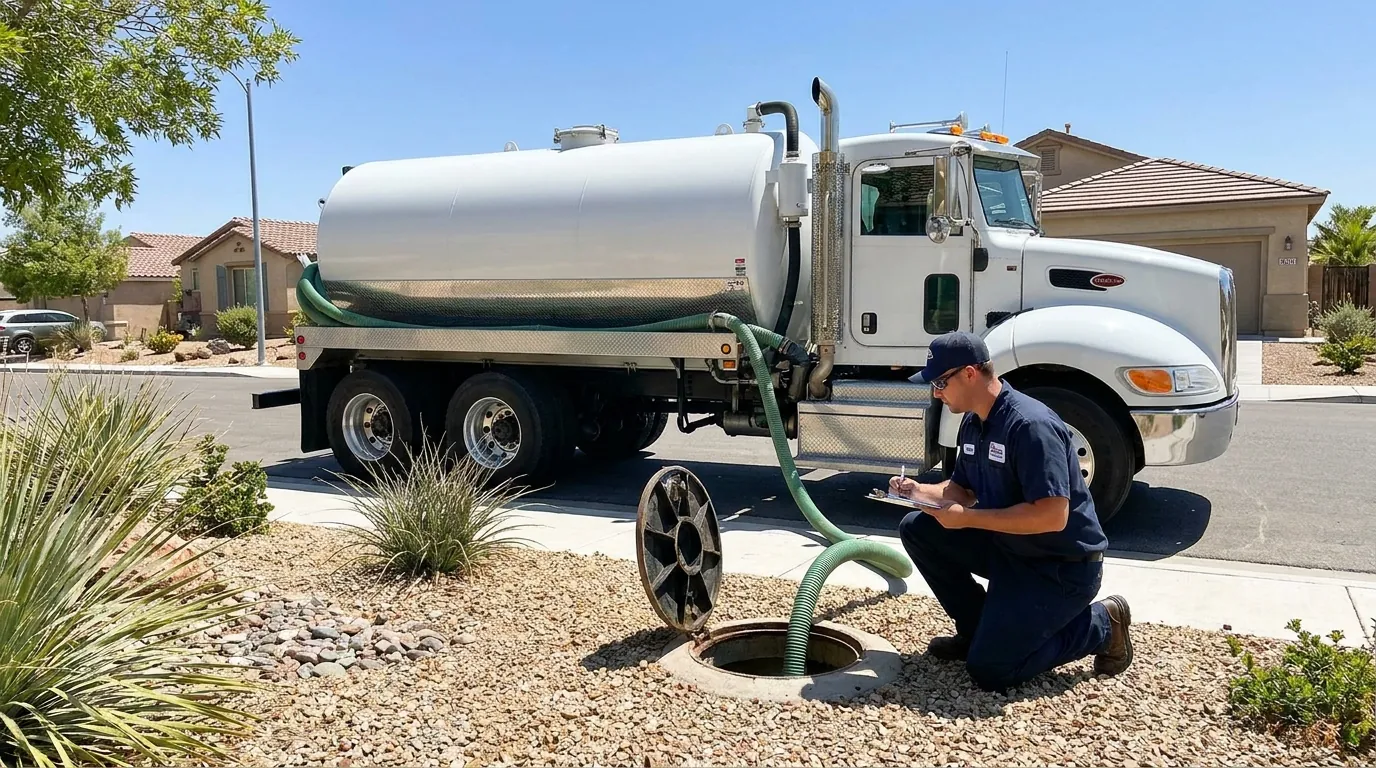
Why an inspection is worth it
A septic inspection tells you the condition of the parts you never see. Homeowners usually call for one of three reasons: they are buying or selling a property, they are noticing warning signs, or they simply want to know where things stand before a problem forces the issue. In every case the goal is the same — catch a small fault while a septic system repair is still minor.
Warning signs that point toward an inspection include slow drains throughout the house, gurgling in the plumbing, sewage odors near the tank or drain field, and unusually green or soggy patches over the leach lines. In arid Winchester, a wet or vividly green spot in an otherwise dry yard is a strong clue that effluent is surfacing where it should not.
Inspection pairs naturally with septic tank pumping, because the tank has to be empty to see the baffles, walls, and outlet clearly.
What an inspection involves
A thorough look moves from the house all the way to the drain field.
-
Records and history
We start with what is known — tank size, age, and the last service date — so we can judge whether accumulation and wear match the timeline.
-
Tank and baffle check
We measure sludge and scum levels and examine the inlet and outlet baffles, tank walls, and lids for cracks, corrosion, and root intrusion.
-
Flow and liquid level
An abnormal liquid level is one of the clearest signals of a problem — too high often points to a struggling drain field, while an outlet issue shows up as solids carrying over.
-
Drain field assessment
We look for surfacing effluent, odors, and soggy ground over the leach lines, since the drain field is the most costly component to replace.
Local soil and what it means for repair decisions
Winchester's alkaline desert soils and deep water table generally help a drain field disperse effluent, but they also hide problems. Because rainfall is scarce, a drain field can be slowly failing for a long time before anything shows on the surface. That makes periodic inspection more valuable here than in wetter regions where trouble surfaces quickly.
If an inspection turns up a cracked baffle, a broken lid, or effluent carrying over to the field, a septic systems repair addressed early is far cheaper than a full drain field replacement. When accumulation is the real issue, the fix may simply be regular septic tank cleaning on a sensible schedule.
Frequently asked questions
When should I get a septic inspection?
Before buying or selling a property, when you notice slow drains or odors, and every few years as routine maintenance. An inspection paired with pumping gives the fullest picture because the tank is empty and every component is visible.
What problems does an inspection find?
Cracked or missing baffles, corroded tank walls, high liquid levels, solids carrying over to the drain field, and surfacing effluent. Catching any of these early usually turns a major repair into a minor one.
Can an inspection tell if I need a septic system repair?
Yes. The inspection identifies whether the issue is simple accumulation, a damaged component, or a drain field that is losing its ability to absorb effluent, and it points you toward the right next step.
Does the tank have to be pumped to inspect it?
For a complete inspection, yes — the baffles, walls, and outlet can only be examined clearly with the tank empty. Some quick checks are possible without pumping, but they are less conclusive.
Talk to someone about your job
Call to describe the problem and get a quote for work in Winchester, NV.