Drain Field Service in Winchester, NV
Drain field service in Winchester, NV. Spot a failing leach field early and understand how arid desert soils affect absorption and repair decisions.
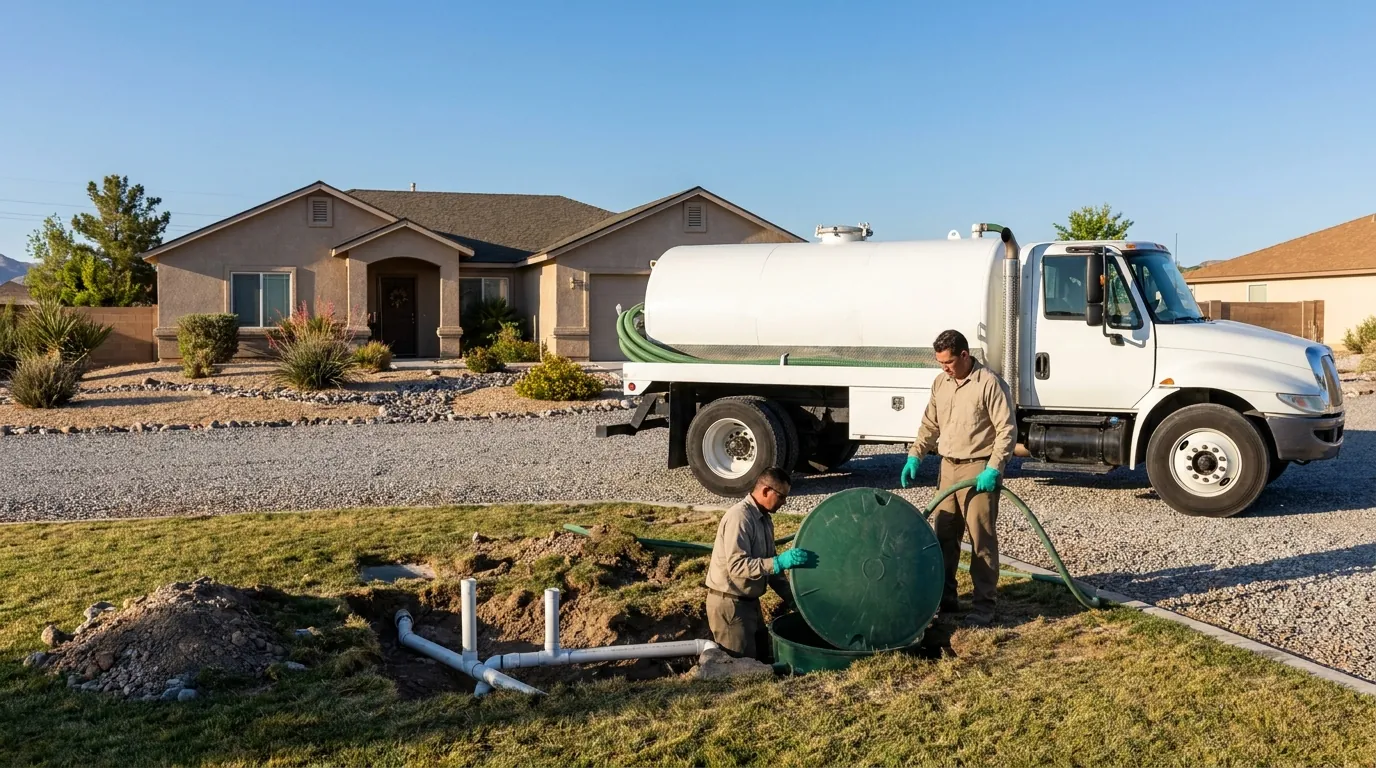
The part of the system you can't afford to lose
The drain field — also called the leach field — is where liquid effluent from the tank soaks into the soil and is filtered naturally. It is the most expensive component to replace and the one most affected by neglect. When solids escape a tank that has gone too long without service, they clog the soil around the leach lines and the field slowly loses its ability to absorb water.
Warning signs of a struggling drain field include soggy or unusually green ground over the leach lines, sewage odors outdoors, slow drains that return after pumping, and effluent pooling on the surface. In Winchester's dry climate, a persistently wet or green patch in an otherwise arid yard is one of the clearest signals that something is wrong below.
Most drain field trouble traces back to solids reaching the field. Staying current with septic tank pumping and using septic system inspection to catch problems early are the two best ways to protect it.
How we approach drain field service
Diagnosing a field is about ruling causes in or out before anyone talks about replacement.
-
Confirm the tank isn't the cause
We verify the tank has been properly emptied and that baffles are intact, since a full tank or failed baffle can mimic drain field symptoms.
-
Assess the field surface
We check for surfacing effluent, odors, soggy ground, and the pattern of any wet areas relative to the leach lines.
-
Evaluate liquid levels
A tank whose liquid level stays high after service often points to a field that cannot accept water at its normal rate.
-
Recommend the least invasive step
Depending on findings, that may mean resting the field, reducing hydraulic load, correcting an upstream problem, or planning for more extensive work.
Desert soils and drain field behavior
Winchester's alkaline, sandy-to-rocky desert soils and deep water table generally help a properly built drain field disperse effluent. The trade-off is that scarce rainfall masks problems: a field can be quietly failing for a long time before anything surfaces, so by the time symptoms appear the damage is often advanced. That makes early attention especially important in this region.
Because the desert climate concentrates water use at the home rather than the yard, sudden increases in household load — new occupants, added fixtures, or heavy laundry days — can push a marginal field past its limit. Managing what reaches the field starts inside the tank, which is why consistent septic tank cleaning is the foundation of drain field health.
Frequently asked questions
What are the first signs of a failing drain field?
Soggy or bright green ground over the leach lines, outdoor sewage odors, and slow drains that come back shortly after pumping. In Winchester's dry climate, a wet spot in an otherwise dry yard is a strong early warning.
Can a drain field recover?
Sometimes. If the cause is solids from an overfull tank and the problem is caught early, reducing load and correcting the upstream issue can help a field recover partially. A field clogged for years is much harder to restore.
What causes drain fields to fail?
The most common cause is solids escaping a tank that was not pumped often enough. Excess water use, compaction from vehicles driving over the field, and root intrusion also contribute.
How do I protect my drain field?
Pump and clean the tank on schedule, keep vehicles and heavy structures off the field, spread out water use, and have the system inspected periodically to catch problems before they reach the field.
Talk to someone about your job
Call to describe the problem and get a quote for work in Winchester, NV.